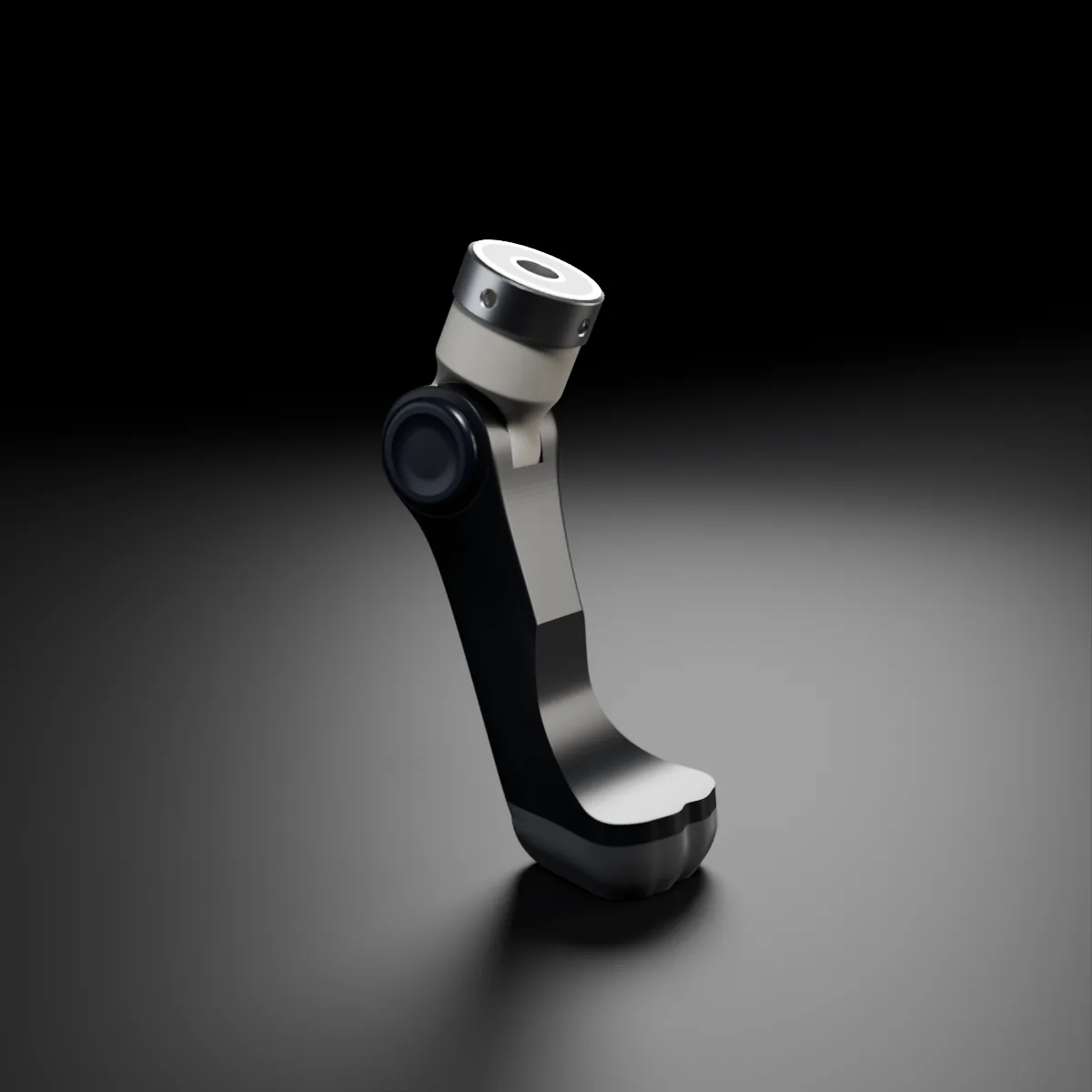
PETG-HF01
Body
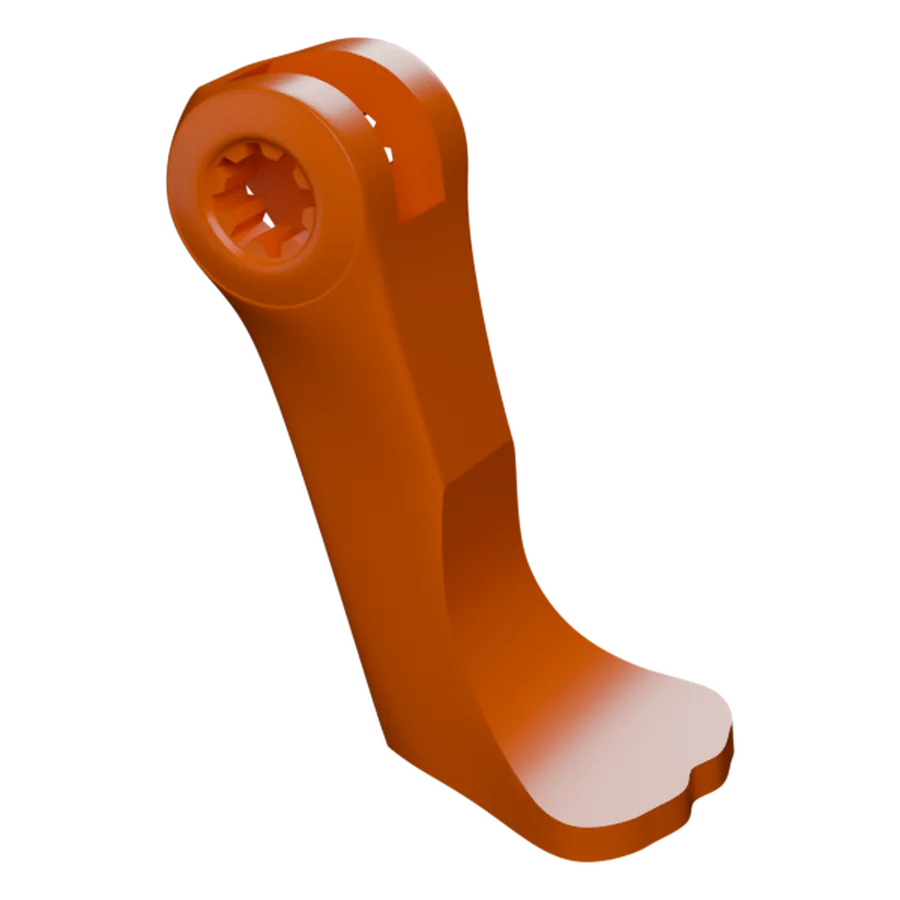
The rigid frame that carries the load from the joint down to the sole. Its curve sets where the paw meets the ground.
10 walls · 50%+ gyroid

OPEN LAB · PROJECT 01
An articulated, 3D-printed tibial paw for cats and dogs. Developed with veterinarians in Brazil. Soon open to the world under the MIT License.
6 printed parts
Two rigid, two flexible, two caps.
99.7 mm
Assembled height of the reference case.
0 breakages
In everyday use, across every PETG-HF test piece.
MIT license
Use, modify, print and share freely.
WHY OPEN
At Dalla Croce Studios we spend our days modelling castles, characters and chess pieces down to fractions of a millimetre, then sending them to printers around the world. The tools are the same here. The purpose is different.
This paw began as a single case and grew through several more, refined with veterinarians at every step. Every lesson from those cases is going into an open package anyone can study, print and improve.
THE OBJECT
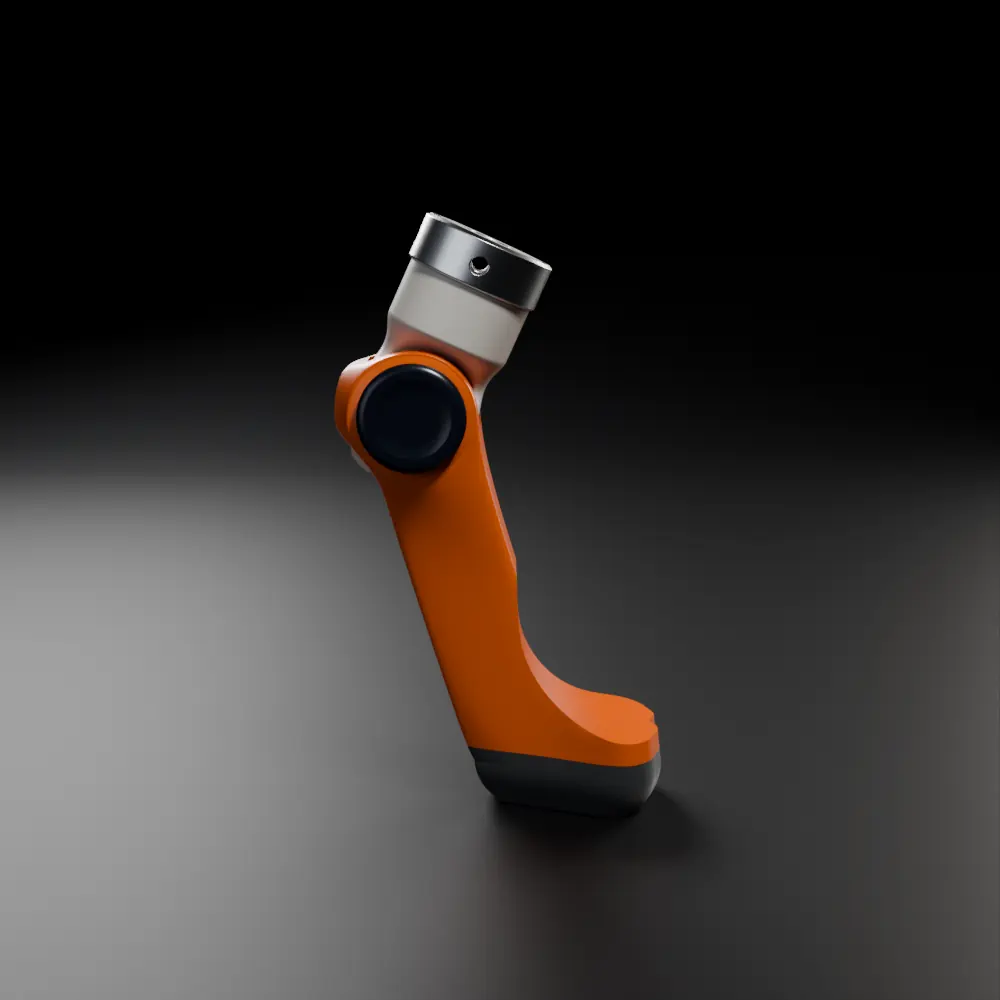
A single curved body carries the load from the joint to the ground. Rigid where it connects. Flexible where it moves. Quiet in form, so the dog is what people notice.
Drag to rotate
01 / THE ANATOMY
Six printed parts and two steel bushings. One elastic joint with no hinge to wear out.

Separated for viewing. Screws are not shown.
THE PARTS
PETG-HF01
The rigid frame that carries the load from the joint down to the sole. Its curve sets where the paw meets the ground.
10 walls · 50%+ gyroid
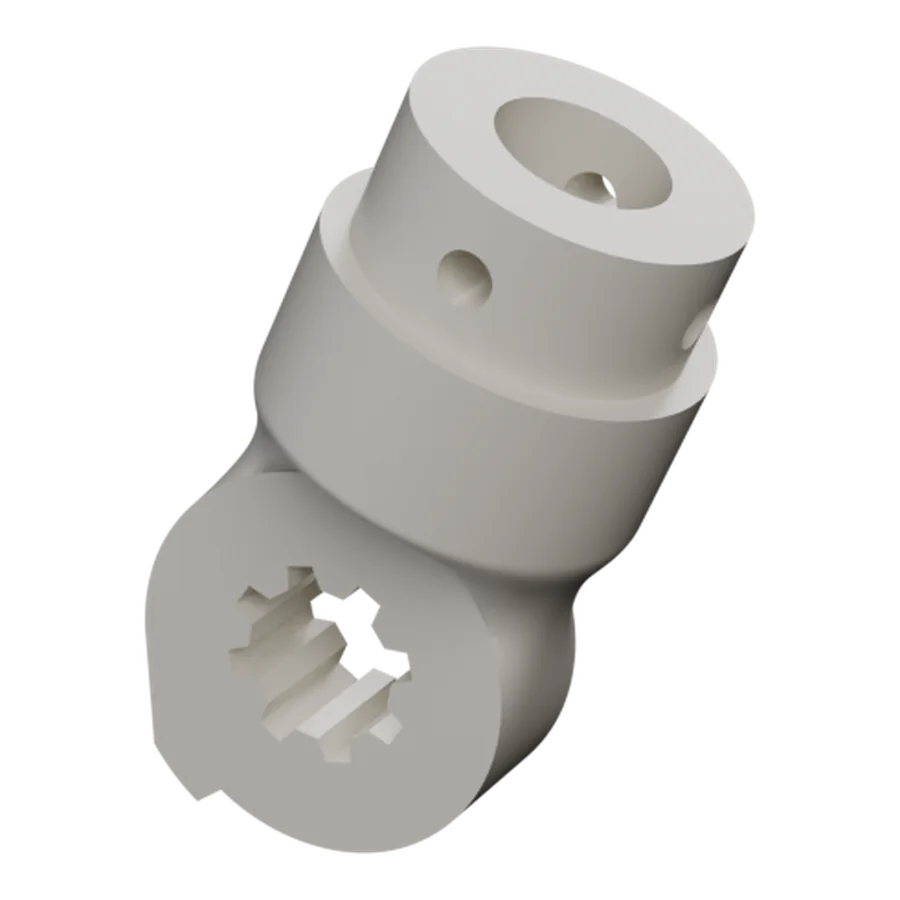
PETG-HF02
Its neck takes the external steel bushing and its channel the internal one. Radial passages align the fixing screws with the implant pin.
Flat base on the bed · tree supports
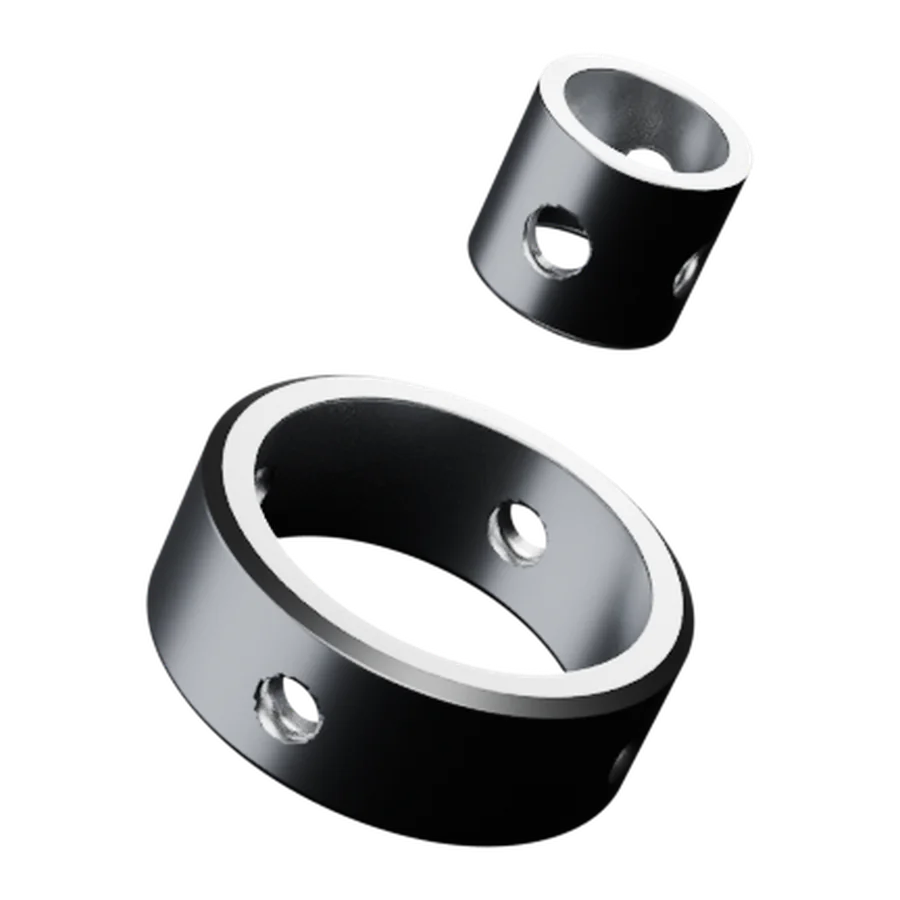
Steel03
An external sleeve around the neck and an internal liner in the channel. They protect the print and carry the screw load.
Machined · not printed
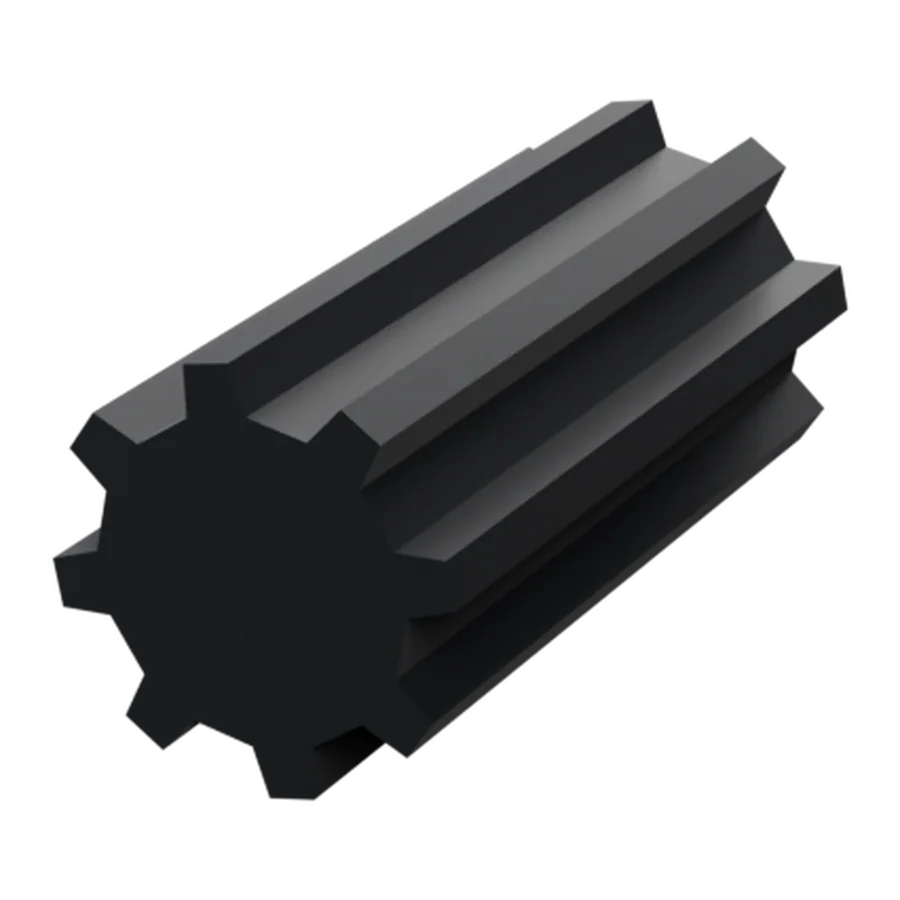
TPU 98A04
Eight lobes key the upper interface to the body. The polymer itself is the joint: it twists under load and returns.
4 walls · printed lying down
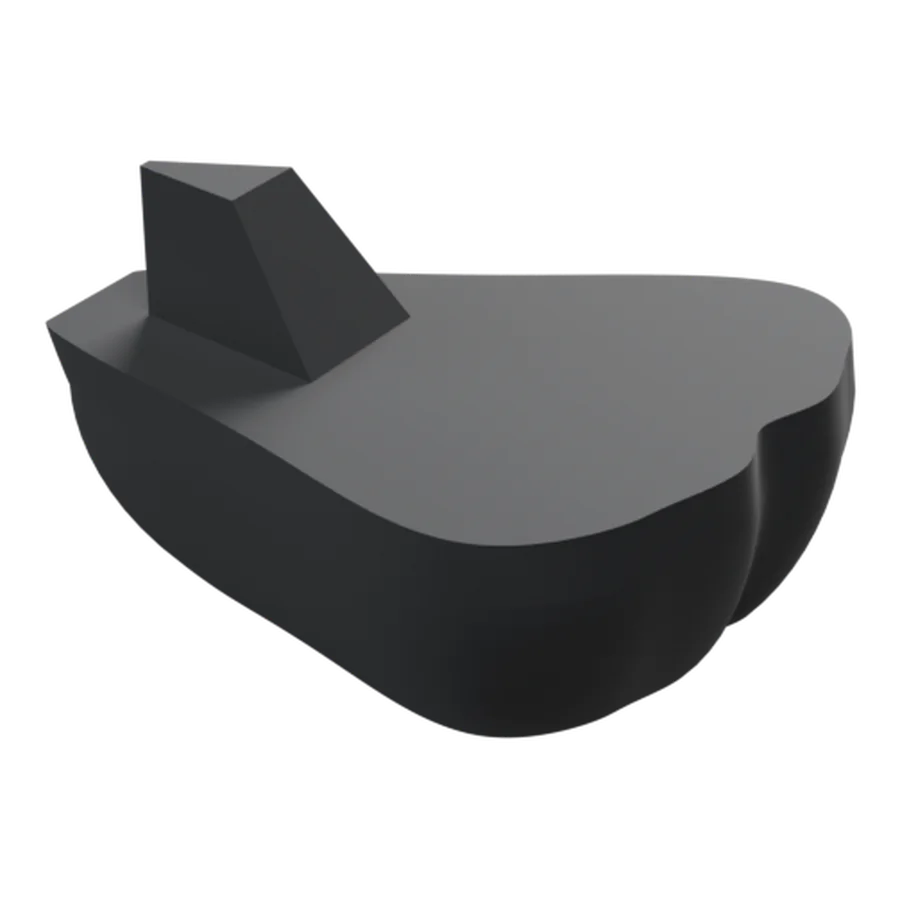
TPU 98A05
A separate contact pad for grip and cushioning, keyed into the body and replaceable as it wears.
4 walls · 15%+ infill
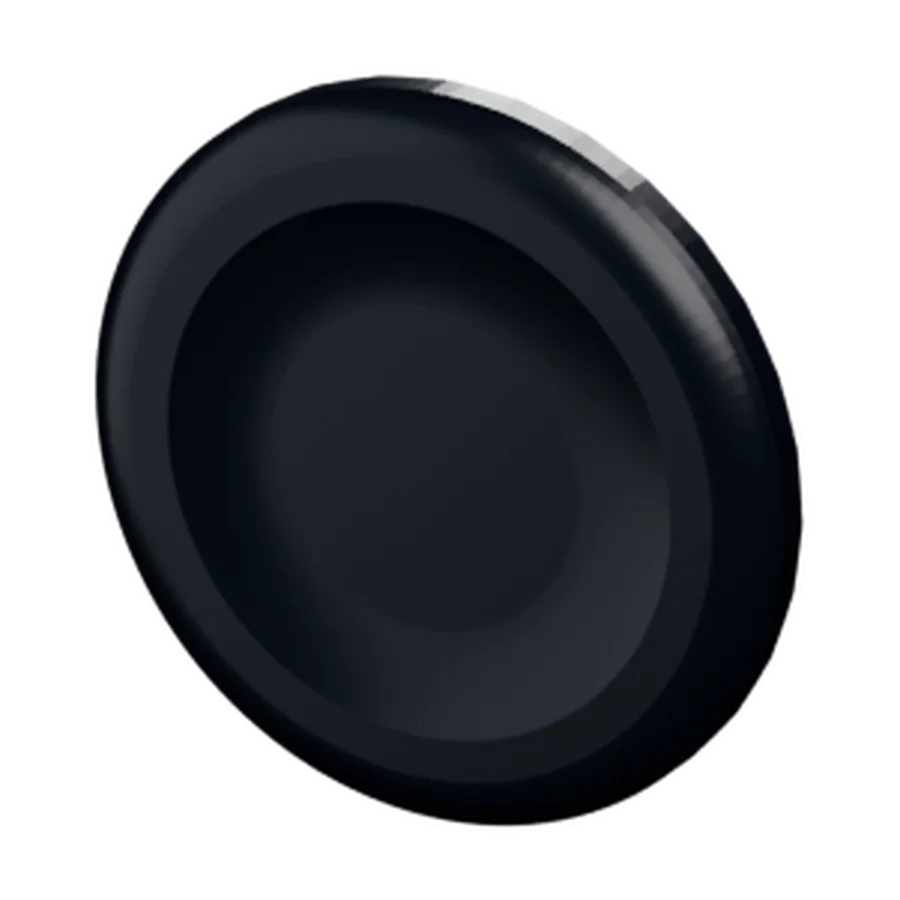
PLA06
Close the joint on both sides. Currently bonded with cyanoacrylate; a removable mechanical retention is in development.
Standard orientation
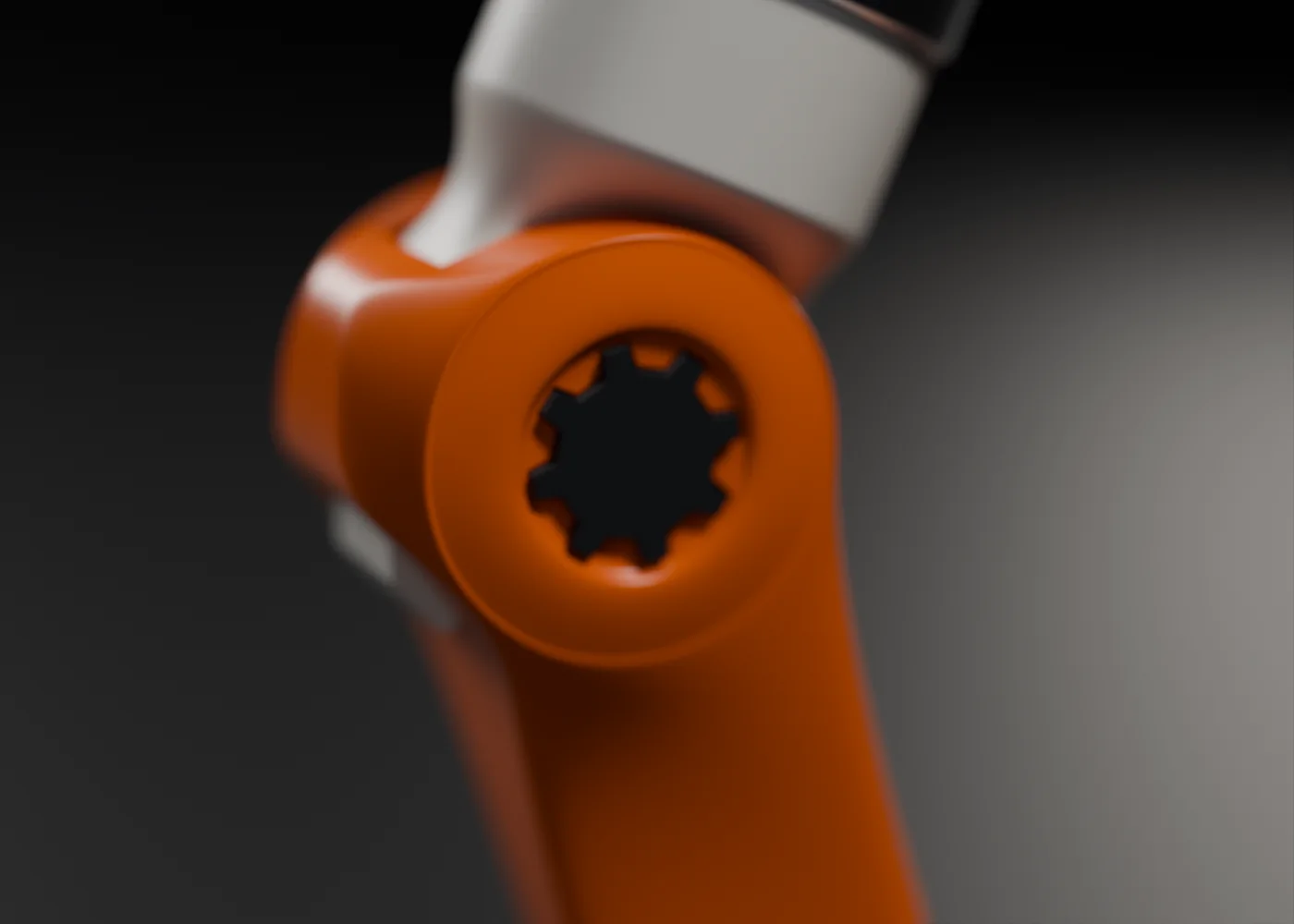
02 / THE JOINT
Eight lobes key a TPU core into the rigid parts on both sides. There are no pins or bearings. When the animal puts weight on the paw, the core flexes to cushion the step. When the paw lifts, it springs back.
03 / THE INTERFACE
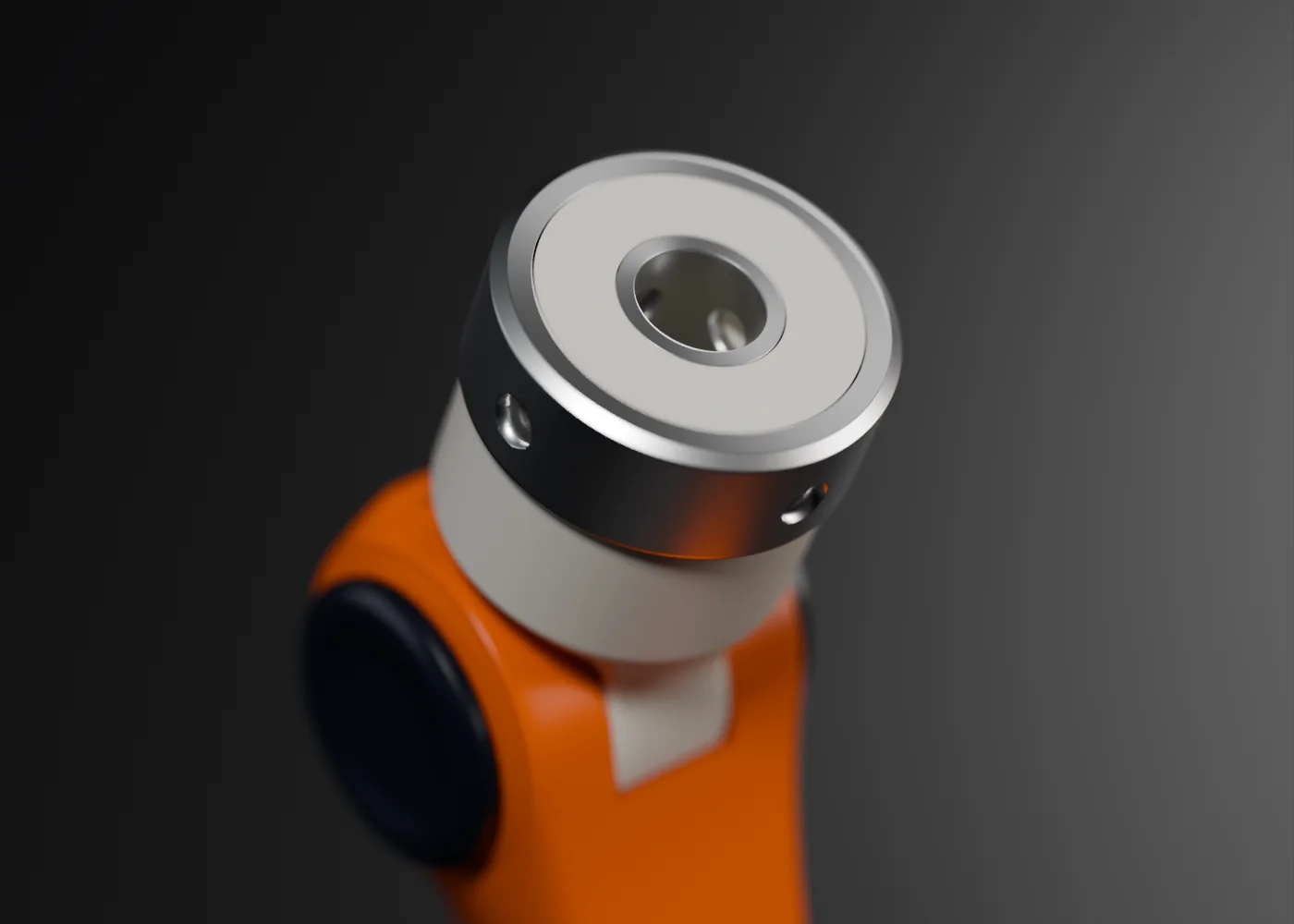
The paw attaches to a tibial pin implant. Plastic never grips the metal directly. An internal steel bushing lines the channel; an external one sleeves the neck. Up to four radial screws, usually two, pass through both bushings and bear on the pin, so the paw can neither turn nor slide off.
The implant is placed surgically by a veterinary team and is not part of the open release. The release documents the paw side of the interface.
04 / THE SOLE
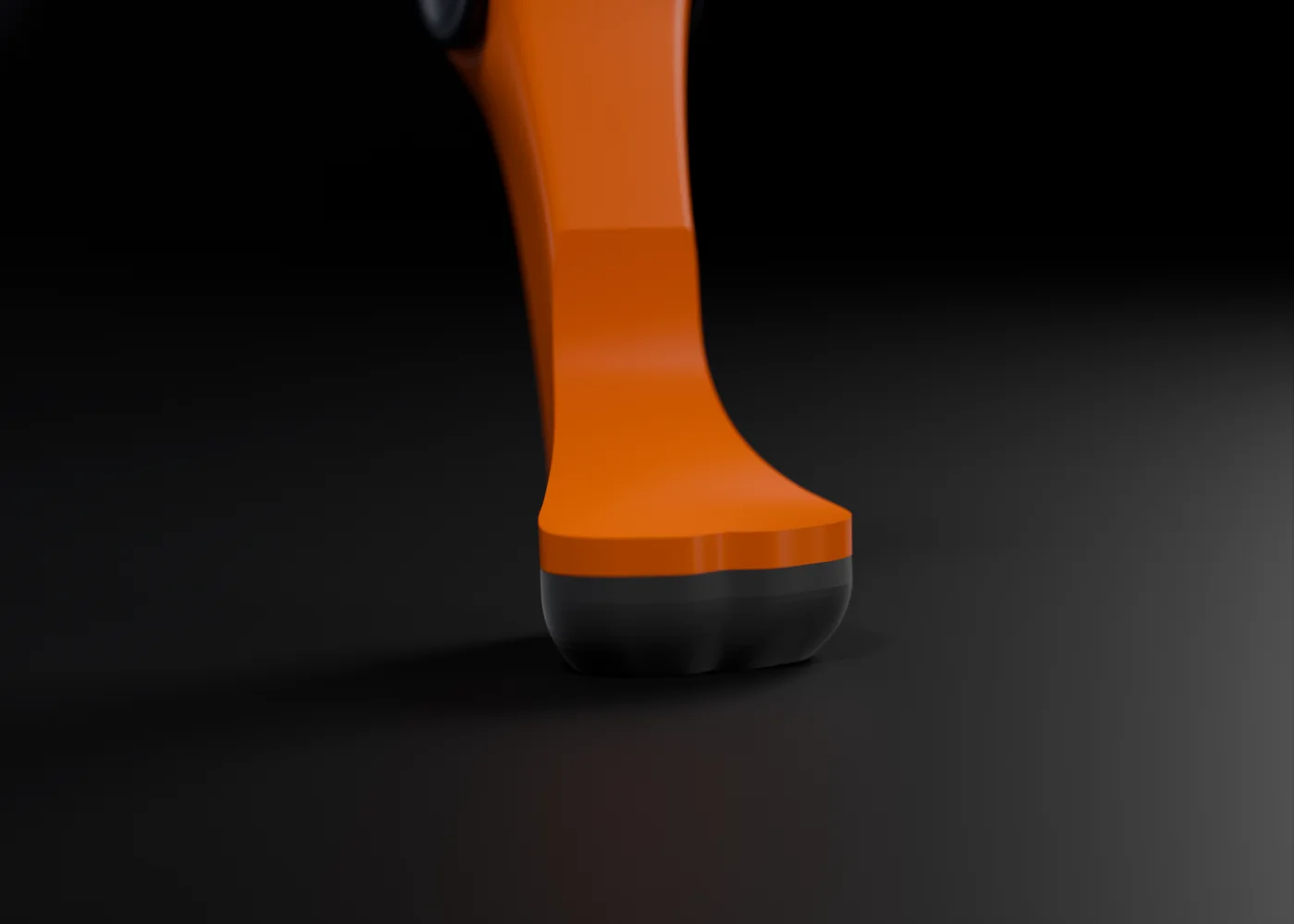
The sole is a separate TPU pad keyed into the body. It grips the ground, softens the contact and takes the wear, so the structure doesn't have to.
On rough ground such as concrete, a liquid-rubber dip adds a renewable layer that protects the TPU underneath.
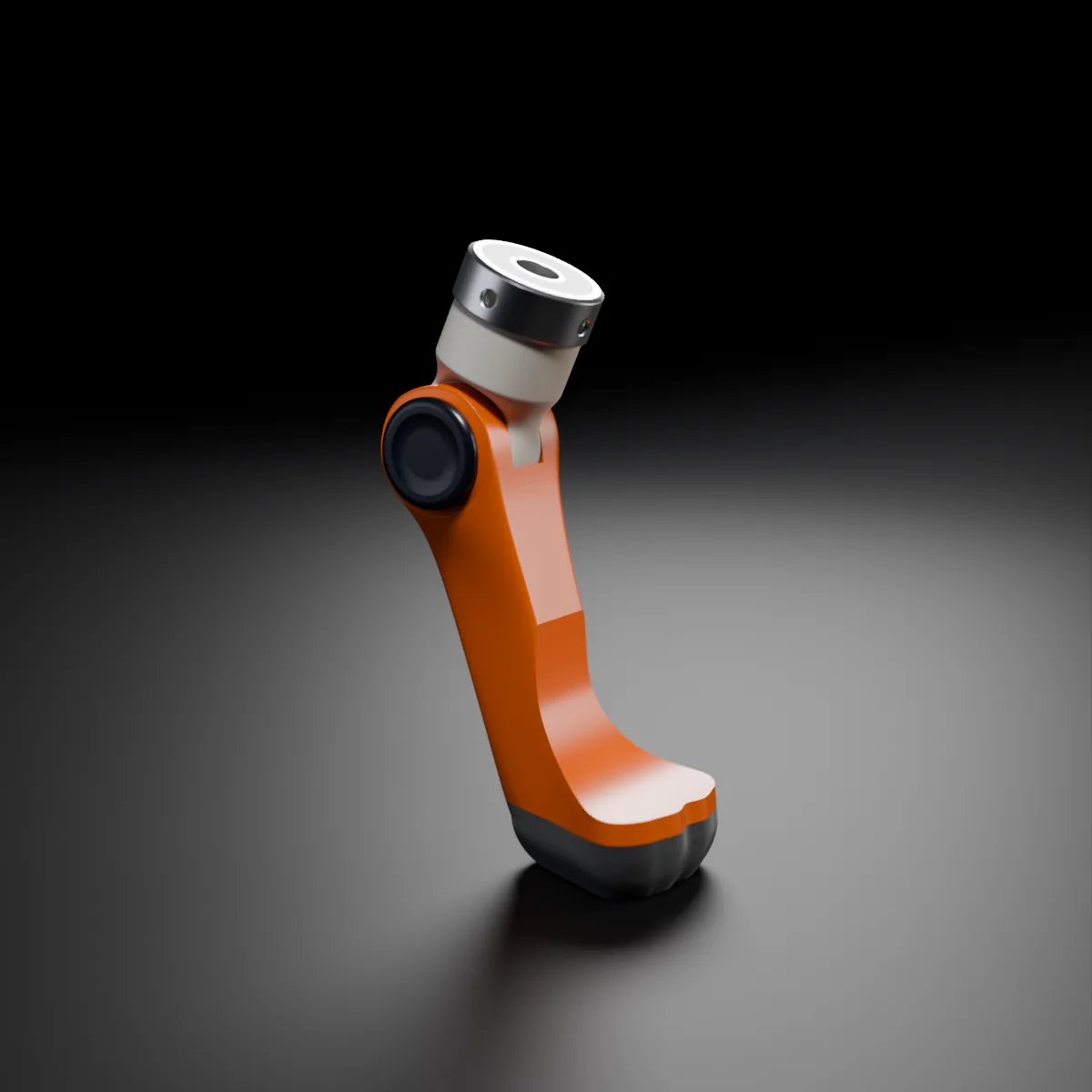
MADE TO BE SEEN
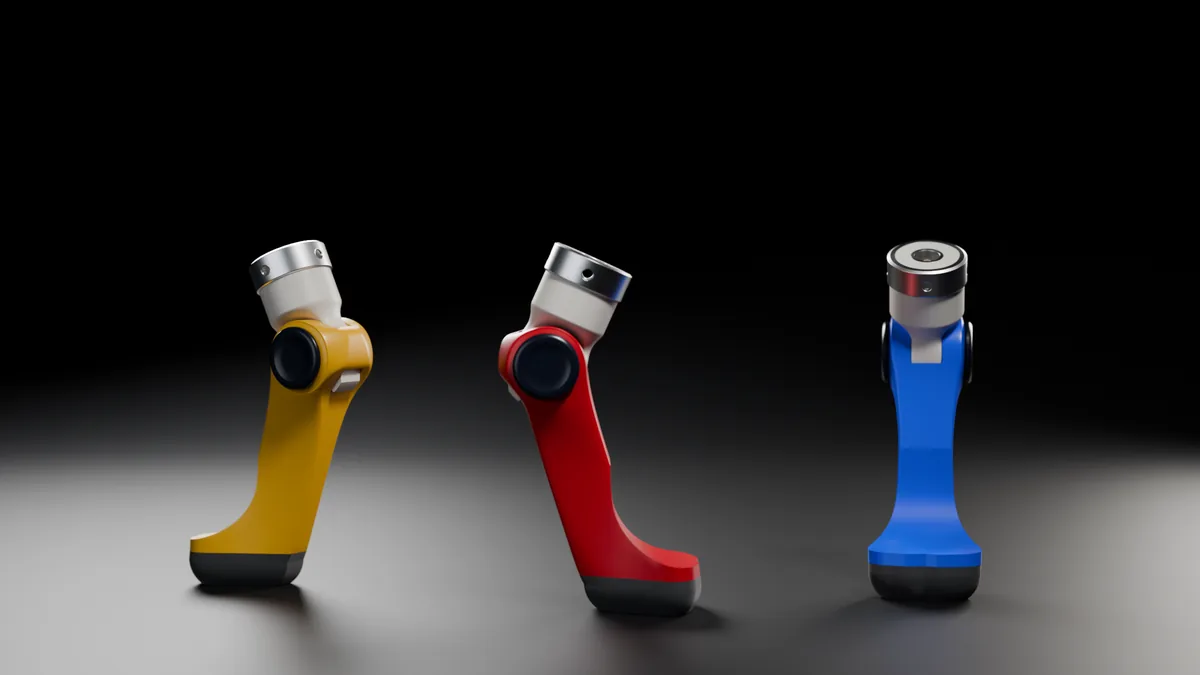
A paw should be something a family is proud of. The body prints in any PETG colour you choose. The geometry and the function stay exactly the same.
Orange
05 / THE RECIPE
No industrial equipment. A standard 0.4 mm nozzle and three common filaments. This is the current reference recipe; the open release will add temperatures, slicer profiles and illustrated orientations.
| Setting | Reference recipe | Applies to |
|---|---|---|
| Nozzle | 0.4 mm standard | All parts |
| Layer height | 0.16 mm | All parts |
| Rigid parts | PETG-HF · 10 walls · 50% gyroid or more | Body, upper interface |
| Alternatives | Carbon-fibre-reinforced filaments, nylon and other strong engineering filaments | All testing so far used PETG-HF |
| Upper interface | Auto-oriented, flat base on the bed · tree supports | Rigid filament |
| Splined core | TPU 98A · 4 walls · printed lying down so the layers resist the twist | Infill tuned to the animal's weight |
| Sole | TPU 98A · 4 walls · at least 15% infill | Validate per case |
| Side caps | Any PLA · bonded with a cyanoacrylate (instant) adhesive that tolerates movement | Mechanical retention in development |
| Sole coating | Liquid rubber dip for abrasive floors such as concrete | Recommended |
06 / THE OPEN RELEASE
Release package in preparationMIT License · versioned releases
The original model file, organised by part, in millimetres.
Every part named, in millimetres and ready to slice.
Dimensioned internal and external steel bushings and screw positions.
Filaments, steel parts, screws, adhesive and coating.
Settings, orientation, bonding and fitting, step by step.
Every change, why it was made and what was learned.
USE IT
Personal, clinical or educational. No fees, no registration.
CHANGE IT
Adapt the geometry, the materials or the method. Share what you learn.
SHARE IT
Print, sell and redistribute. Keep the copyright and license notice with the files.
One email when the files go live. No newsletter.
THE ROAD AHEAD
In use
Developed across multiple cases with several veterinarians in Brazil. The current design is in use with veterinary follow-up.
In progress
Bushing drawings, print recipe, assembly guide and the complete development story.
Next
Source, STLs and documentation published under the MIT License, with versioned releases.
Planned
Compression, torsion, retention, wear and cycle testing, with results tied to each revision.
Planned
Guided measurements and case-specific STLs generated from the reference design.
07 / THE PERSONALIZATION SERVICE
Measuring and remodelling a paw for every new case takes hours of expert work. The personalization service does it for you: enter the measurements, review them, and receive print-ready STLs rebuilt around your case.
Each interface is regenerated on its own. Change the pin and the bushings follow; change the height and the joint stays where it belongs. Nothing is simply scaled.
New case · Tibial paw
mmPin diameter, insertion length and the orientation of its flat.
Inner and outer diameters, length and shoulder.
Diameter, wall and the depth of its recess.
Size, length and the position of all four.
Height, sole length and width, left or right side.
Core profile and length, matched to the animal's weight.
The open files stay free. The subscription pays for the automation: generation, case history, storage and support.
MADE WITH CARE
Yes. The open release, including the editable source, STLs, drawings and guides, will be published under the MIT License. You can download, print, study and modify it at no cost.
The MIT License permits commercial use and modified versions, as long as the copyright and license notice are kept with the files. It provides the design as-is, without any warranty.
Every test so far used PETG-HF, with no breakages in everyday use. Carbon-fibre-reinforced filaments, nylon and other strong engineering filaments can also be used for the rigid parts. Use at least 50% gyroid infill, and TPU 98A for the core and sole.
No. The paw is an external prosthesis designed to attach to a tibial pin implant placed surgically by a veterinary team. The implant is outside the open release; the release documents the steel bushings and screw interface on the paw side.
Only a veterinary professional can assess that. Fit, joint stiffness, materials and the implant itself are case-specific. The reference dimensions belong to one case and are not a universal size.
You enter the measurements of your case, review a summary, and receive a set of STLs rebuilt around those dimensions. Interfaces are regenerated individually rather than simply scaled. It is open to anyone, and designed with veterinarians, clinics and prosthetists in mind.
Case feedback, bench testing and improvements to the design are welcome. Write to us and we will share the documentation as it is prepared.
FROM THE STUDIO BEHIND KINGDOM OF GUARDIA
Dalla Croce Studios designs printable worlds for tabletop games. Open Lab is where that craft leaves the table. Every collection you support helps the studio keep investing in open work like this.